Home / Safety Hub
Safety Hub
Plain-English guidance on racking and forklift safety — because your company's most valuable asset is your people.
Plain-English guidance on racking and forklift safety — because your company's most valuable asset is your people.
Two critical rated capacities must never be exceeded: the maximum unit load (one pallet) and the total rated capacity of each bay. Mark them clearly on the racking — a safe working load sign is the most effective way. Changes to the racking configuration alter the safe working loads: get supplier approval before modifying anything.
Racking should be designed for the size, shape and weight of what you store. Aisle widths must match your forklift's turning circle, with emergency access, lighting and manual-handling zones considered.
Never weld cleats or bearers, or alter uprights, bracing or beams without approval from a competent person. Replacement parts should come from the original manufacturer — or be certified compatible by an engineer. It's dangerous to mix brands of pallet racking.
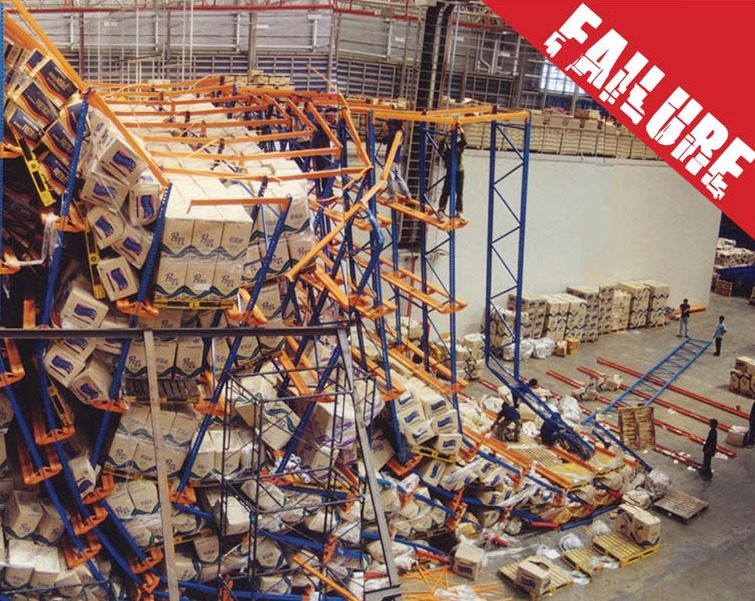
Report damage to a supervisor immediately for inspection. Record it — coloured tags showing location and level of damage work well. Major collapses that expose workers to risk must be reported to WorkCover on 13 10 50.
Falls from roofs, scaffolds, ladders, trucks and mezzanine floors leave workers with permanent injuries. Watch unprotected edges, incomplete scaffolds and fragile roofs.
Always keep three points of contact when climbing or standing on a ladder, and secure ladders by tying them off at top and/or bottom.
Use fall-arrest systems — catch platforms and harness systems — plus the right PPE: goggles, gloves, boots, hard hats and ear protection as the task requires.
A fully laden two-tonne forklift weighs about five tonnes. Even at walking pace it can kill — and more than half the Australians killed in forklift incidents are pedestrians. Operators need a high-risk-work licence; PCBUs must provide safe systems, maintained machinery and real traffic management.
Hazards, risks and remedies — adapted from Safe Work Australia material.
Download PDFSafe operation and maintenance of pallet racking in warehouses and storage areas.
Download PDF